

The Ma Barker Story
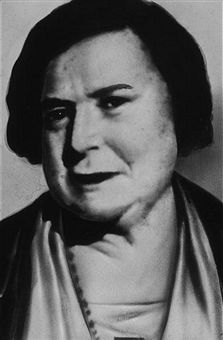
(Kate “Ma” Barker)
Born Arizona Clark in Ash Grove, Missouri in 1873, Ma Barker had a number of aliases, even as a child. Known to friends and family as “Arrie” or “Kate,” she was the mother of four sons, all criminals, who would form the Barker-Karpis Gang.
The gang would become infamous for its criminal activity, even earning the esteemed title of Public Enemy No. 1 from J. Edgar Hoover. These events occurred during an era when the exploits of gangs and criminals gripped Middle America and was excellent fodder for the public and the press.
After her death during a shoot-out with the FBI, she became known as a ruthless matriarch who controlled and organized her sons’ crimes, which included robberies, kidnappings and murder. J. Edgar Hoover, the Director of the Bureau of Investigation at the time, described her as, “the most vicious, dangerous and resourceful criminal brain of the last decade.”
Her portrayals in film and literature have presented her as a monstrous mother. Those who knew her insist this was not true and claim it was a fabrication by Hoover to justify the FBI’s killing of her.
The Back Story

Ma Barker married George Barker in 1892 and had four sons between 1893 through 1901: Herman, Lloyd, Arthur and Fred. George, her husband, worked a series of low skilled jobs and was described as “shiftless” in an FBI document. That same document stated the Barker’s paid no attention to their son’s education. As a result, they were “more or less” illiterate.
In the 1920s, organized crime and gangs grew at an insidious rate. By the 1930s, it had grown into a nationwide problem, spawning new and more malevolent crimes.
The boys’ criminal activity started as early as 1910, when Herman, her eldest, was 17. Herman and his brothers were involved in multiple crimes over the years with increasing seriousness and violence. Ma always took the side of her children, and Herman’s arrest, was heard saying, “My poor, innocent boy!” She was incensed at the indignity he had suffered, so much so that the family left and moved to Tulsa, Oklahoma.
In Tulsa, they were barely making ends meet. Ma Barker, tired of barely getting by on what her husband earned, wanted the finer things in life. She began to see her boys as a means to that end. Recognizing that her son had made good money while in prison through criminal activity, she began to encourage petty theft and bad behavior, effectively training them and laying the groundwork for them to financially support her in the years to come.
Some years later, the boys were inducted into the Central Park Gang. Sadly, Herman died in 1927 after a robbery that left one policemen dead, shot by Herman at point-blank range in the mouth. Herman then killed himself to avoid prosecution.
The remaining brothers soon found themselves in prison for their various criminal activities, leaving Ma on her own. It’s believed her husband, George, left during this time. The reason is unclear. Some say the criminal life became intolerable; others say after his son’s death and the imprisonment of his other sons, he “gave up completely and removed himself from the scene.” Still, others say he and Ma argued about their son’s criminal lives.
Alone, with her sons in jail and her husband gone, Ma lived in miserable poverty in a “dirt-floor shack” from 1928 through1931. Rumors say she became “loose” with other men and by 1930 was living with a jobless man named Arthur W. Dunlop. However, things began to look up when Fred was released from jail in 1931.
The Gang
Fred joined forces with a former inmate, Alvin Karpis to form the Barker-Karpis gang. After a series of robberies and the murder of a sheriff in Missouri, the gang fled the territory, Ma and her lover with them. During this period, Ma used various false names and became known to the gang as “Kate.”
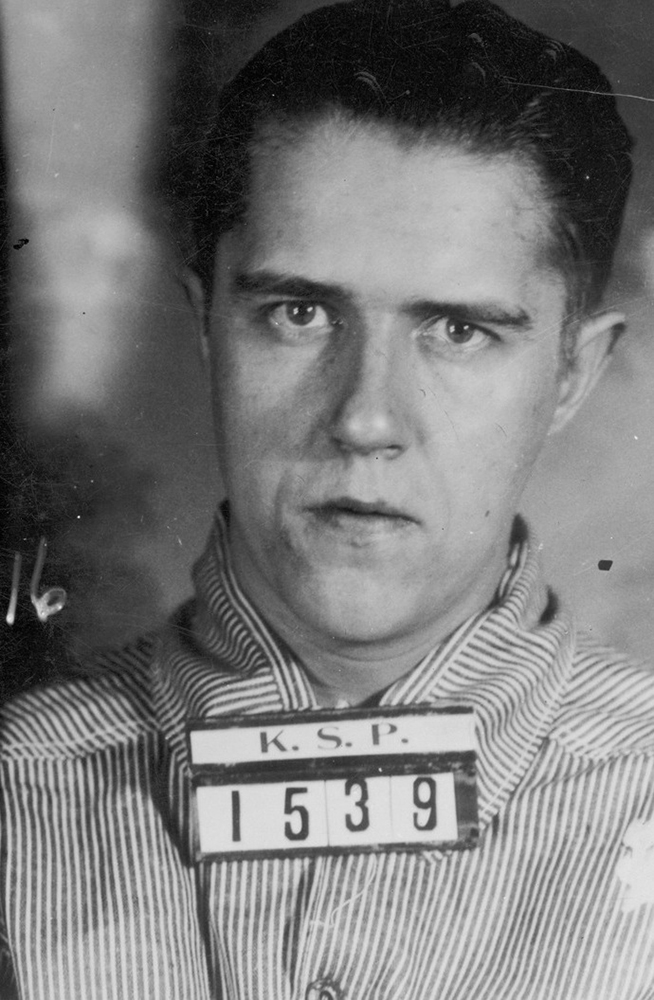
In 1932, Arthur was released from prison and joined the gang along with other criminal associates. They moved to Chicago, but decided to leave, not wanting to work for Al Capone. Their next stop was St. Paul, Minnesota which had the reputation as being a haven for wanted criminals. It was here that their most infamous crimes were committed. Operating under the protection of the city’s corrupt police chief, Thomas “Big Tom” Brown, the gang transitioned from being robbers to kidnappers.
By 1933, the gang had pulled off two successful kidnappings of wealthy St. Paul businessmen. The first being the kidnapping of William Hamm, which earned them a ransom of $100,000 (approximately $1.8M in todays money). They later kidnapped Edward Bremer and netted a $200,000 ransom (approximately $3.7M in today’s money).
It was fingerprint evidence from the Bremer kidnapping that tipped off the FBI to the gang’s involvement, putting them on the bureau’s radar. The gang knew they had to get out of the Midwest—and fast—because the FBI’s famous Flying Squad, a talented group of agents who were known for tracking down and ending the careers of many famous criminals, were not far behind.
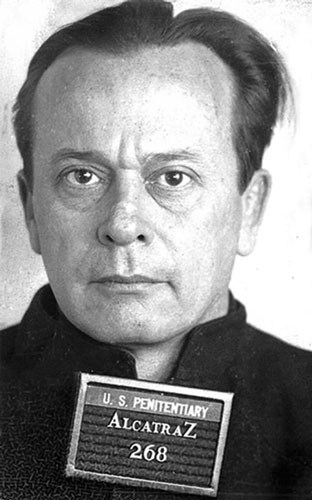
In an effort to escape, the gang, along with Ma, headed south to Ocklawaha, Florida. For a time, it seemed that no one could find them, until a map indicating the location of Ma, Fred and the rest of the gang was discovered during the arrest of Arthur “Doc” Barker.
With the help of an alligator named Gator Joe, who was referenced in the map, the Flying Squad found the gang’s elusive hideout. In the wee hours of January 16, 1935, agents surrounded the house and demanded the gang members surrender. Fred Barker chose this moment to open fire on the federal agents, and the shootout began.
Four hours later, the gunfire stopped. Bodies were found in the same bedroom. The Flying Squad had successfully taken out two members of the notorious Barker-Karpis gang.